

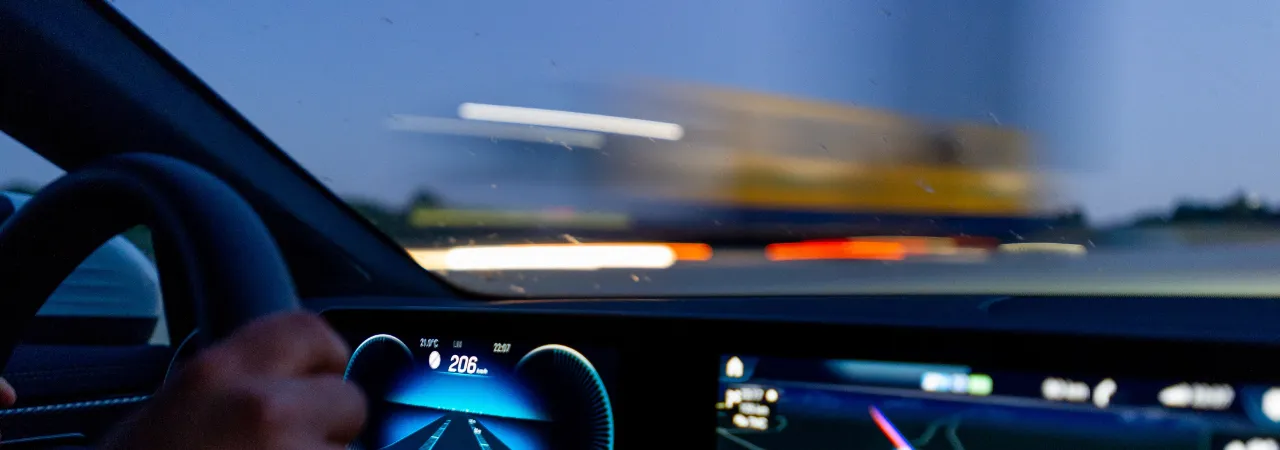
What Is Reckless Driving in California?
Reckless driving in California means driving with willful or wanton disregard for the safety of people or property, as defined under California Vehicle Code § 23103. This includes driving on public roads or in parking areas in a way that shows clear indifference to safety.
When someone drives recklessly, they knowingly put themselves and everyone on or near the road in danger.
Unlike most unintentional vehicle accidents, a reckless driver understands the risks and chooses to drive without caution.
Reckless driving has serious consequences, and drivers should be held accountable for their deliberate actions that put others in danger.
If you have been injured in an accident involving a reckless driver, it is essential to know your legal rights.
In this article, the California car accident lawyers at Wells call Injury Lawyers go over reckless driving in California and your ability to pursue justice and compensation.
If you have questions, please contact us today by calling at 707-426-5300.
What Is Considered Reckless Driving in California? Key Facts to Know
California law treats reckless driving as more serious than an ordinary traffic mistake, and that distinction matters both in court and in a personal injury claim. Here are the key facts to understand.
Key Takeaways
- California Vehicle Code Section 23103 defines reckless driving as operating a vehicle in willful or wanton disregard for the safety of persons or property, a higher bar than ordinary negligence.
- Common examples include speeds of 100 mph or more, unsafe lane changes without signaling, passing on the shoulder, tailgating, and intentionally antagonizing another driver.
- A misdemeanor conviction can bring up to 90 days in jail, a $1,000 fine, and two DMV points, but a criminal case does not replace a separate civil claim for medical bills, lost wages, and pain and suffering.
Watch our quick 1-minute video explaining how we can negotiate with health insurance companies to negotiate your pay back to them:
What Is Considered Reckless Driving in California?
In California, reckless driving charges aren’t tied to a specific speed limit. Instead, they’re determined on a case-by-case basis. However, exceeding 100 miles per hour under any circumstance constitutes reckless driving in the state.
Though “reckless driving” is a relatively broad term that can apply to a number of different driving behaviors, California law defines a reckless driver as a “person who drives a vehicle upon a highway in willful or wanton disregard for the safety of persons or property.”
This law also applies to driving in an off-street parking facility.
The phrase “willful and wanton” generally means that the driver behaved intentionally and with the knowledge that the behavior would likely result in harm. Some examples of reckless driving include:
- Excessive speed based on posted speed limits or road conditions;
- Changing lanes excessively during traffic and without proper signaling;
- Improper passing, including use of the shoulder;
- Tailgating;
- Failing to obey traffic signals such as stop signs;
- Intentional antagonizing another driver; and
- Driving in places where vehicles are not permitted, such as sidewalks or construction zones.
What speed is considered reckless driving? In California, speeds reaching 100 miles per hour or more are generally considered reckless.
Reckless driving in California is a misdemeanor offense.
If convicted, you could face:
- Up to 90 days in county jail
- A fine of up to $1,000
- Two points on your DMV driver’s license record
You Deserve to Feel Safe on the Road Again
Being hit by a reckless driver is frightening, and dealing with injuries, medical bills, and insurance calls afterward can feel overwhelming.
Wells Call Injury Lawyers has spent over 40 years standing up for injured Californians and has recovered more than half a billion dollars for our clients. Talk directly with a real lawyer, not a call center, about what happened and what you’re owed.
Schedule A Free ConsultationCauses of Reckless Driving Accidents
Reckless driving accidents often stem from drivers deliberately ignoring traffic laws and safety standards. This type of driving not only endangers the reckless driver but also puts every other motorist, pedestrian, and cyclist at risk. Here are some common causes of reckless driving accidents:
- Excessive Speeding: Driving well over the speed limit reduces reaction time and makes vehicle control difficult, increasing the risk and severity of accidents.
- Aggressive Driving and Road Rage: Actions like tailgating, frequent lane changes, and antagonizing other drivers escalate the risk of collisions.
- Street Racing: Engaging in unauthorized races on public roads leads to high-speed maneuvers and dangerous driving conditions, often resulting in severe accidents.
- Driving Under the Influence: Alcohol or drug impairment slows reaction times and impairs judgment, often resulting in reckless driving behavior.
- Distracted Driving: Behaviors like texting while speeding show willful neglect of road safety and can lead to serious accidents.
- Intentional Traffic Violations: Deliberate acts, such as ignoring traffic signals or passing in restricted zones, demonstrate a blatant disregard for the law and endanger everyone on the road.
Injuries Due to Reckless Driving
Reckless driving accidents can lead to severe, life-altering injuries. Because these collisions often occur at high speeds or involve intentional negligence, the injuries sustained are typically more serious than those seen in minor traffic incidents. Common injuries include:
- Traumatic Brain Injuries (TBI): Severe head trauma can cause concussions, brain swelling, or long-term cognitive impairments, requiring extensive medical treatment.
- Spinal Cord Injuries: High-impact collisions may lead to partial or complete paralysis, necessitating ongoing medical care and long-term support.
- Fractures and Broken Bones: Violent crashes can result in shattered or displaced bones, often requiring surgery and long recovery periods.
- Internal Injuries: Collisions can cause significant internal damage to organs like the liver, spleen, or lungs, requiring immediate medical intervention.
- Whiplash and Neck Injuries: Rear-end or high-speed impacts can cause chronic pain and limited neck mobility, often needing physical therapy.
- Severe Lacerations and Burns: Shattered glass, twisted metal, or vehicle fires can lead to deep cuts or burns, causing permanent scarring or disfigurement.
- Emotional and Psychological Trauma: Victims may experience PTSD, anxiety, or depression following the trauma of a reckless driving accident, affecting their overall well-being.
Recent Reckless Driving Accident Settlement
The Case: Our client received a $1,500,000 settlement for injuries sustained in a car accident caused by reckless driving.
Disclaimer: Please keep in mind that testimonials or reviews do not constitute a guarantee, warranty, or prediction regarding the outcome of your legal matter, as the facts and circumstances of each case differ.
Is Speeding Considered Reckless Driving?
Excessive speeding in California can be considered reckless driving, but no specific speed automatically qualifies. Instead, authorities determine reckless driving based on the circumstances of each case.
Can I File a Lawsuit Against a Reckless Driver?
There is a difference between accidental behavior, such as failing to see the car in front of you that stopped abruptly while traveling at low speeds, and intentionally street racing or swerving in traffic.
That is why there are different punishments for each. Reckless driving in California is a misdemeanor, and reckless drivers may face both a civil lawsuit to help the victim recover costs and a criminal case for intentionally breaking the law.
If you were injured by a reckless driver, you might be entitled to compensation for your losses—such as medical expenses, lost wages, property damages, and pain and suffering—you sustained.
If the driver’s conduct was especially egregious (often the case with reckless driving), you might also receive punitive damages, though they are rarely awarded.
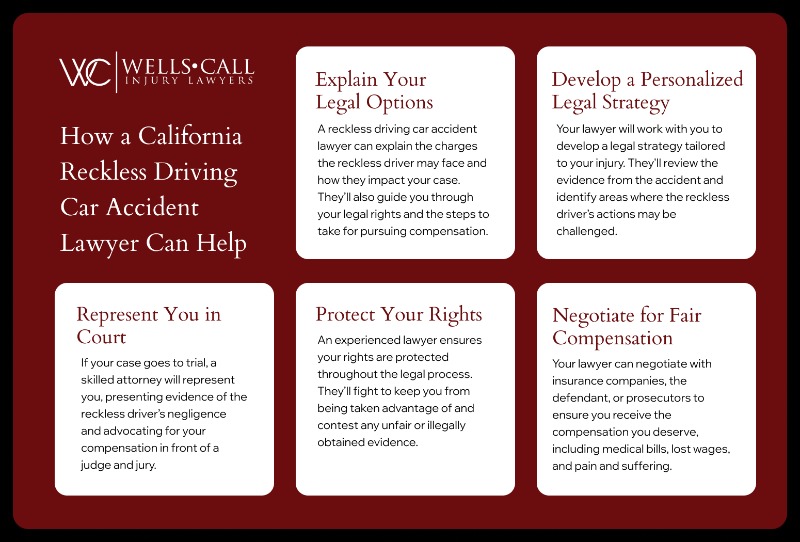
An experienced personal injury attorney can help you choose the best legal course of action for your specific situation.
Click to contact our car accident lawyers
Contact a Top-Rated Reckless Driving Car Accident Attorney at Wells Call Injury Lawyers for a 100% Free Consultation Today
Voted the best law firm in Solano County, the injury attorneys at Wells Call Injury Lawyers understand how difficult it can be to navigate the California legal system.
If you are coping with a serious injury caused by a reckless driver, the last thing you need to be worried about is how to pay your bills.
Let us help you get the compensation you deserve to heal and move forward. Contact us to schedule an appointment for your free case review.
Frequently Asked Questions: Truck Accident Black Box Data in California
Black box data, stored in a truck’s engine control module (ECM), records details like vehicle speed, hard braking, throttle position, RPM, and cruise control status in the seconds before a crash. This data helps reconstruct exactly what happened, showing whether the truck was speeding, braking late, or failing to slow down at all.
There is no fixed waiting period, and that is the problem: a carrier can legally repair or return the truck to service within days of a crash, overwriting or losing the ECM data in the process. That is why attorneys move immediately to send a preservation demand before the truck goes back on the road.
A spoliation letter is a formal notice sent to the trucking company and its insurer demanding that all electronic and physical evidence, including ECM data, ELD logs, GPS records, and dash cam footage, be preserved. Without it, a carrier has no legal obligation to hold onto the data, and it can disappear within days.
A truck’s ECM typically logs vehicle speed, hard braking or acceleration events, seatbelt use, engine RPM, cruise control status, and diagnostic fault codes. Some systems also capture pre-crash data showing throttle position and deceleration in the seconds leading up to impact, directly showing what the driver did or failed to do.
Electronic logging devices (ELDs), GPS and fleet tracking systems, dash cameras, and collision-avoidance system data all matter alongside ECM data. Together, these records can confirm a driver’s hours of service, route, speed, and braking behavior, corroborating or contradicting the black box data pulled from the vehicle.
Black box data is typically pulled through a controlled inspection, where a qualified technician connects diagnostic equipment to the truck’s ECM to extract the stored information. Attorneys for both sides are usually present, and the process is documented to preserve the chain of custody so the data holds up in court.
Yes. If a carrier resists a preservation request or has already lost the data, an attorney can petition the court for an order compelling production or imposing sanctions for spoliation. Courts take electronic evidence seriously in commercial truck cases because it is often the clearest record of what happened before the crash.
Black box data reconstructs the crash sequence with figures a driver’s account alone cannot provide, such as exact speed and braking timing before impact. Compared with physical evidence, witness statements, and driver logs, it can reveal safety violations or hours-of-service issues that support a negligence claim against the driver or carrier.
Contact an attorney as soon as possible so a spoliation letter can be sent before the truck is repaired, moved, or returned to service. Also try to identify the truck itself, its VIN, USDOT number, and unit number, since carriers manage large fleets and locating the exact vehicle involved is a critical first step.
You can request it, but trucking companies and their insurers rarely cooperate voluntarily with an individual, and the data can be lost within days. An attorney experienced in California truck accident cases knows how to send an immediate preservation demand, arrange a proper inspection, and pursue a court order if necessary.
Call 707-426-5300 or complete a Free Case Evaluation form
Where You Can Find Our Fairfield Office
If you’re hurt and unsure what to do next, contact the California personal injury law firm clients trust. We’re here to listen and help you find a path forward. Tell us what happened, and we’ll walk you through your options—no pressure, no upfront costs.