

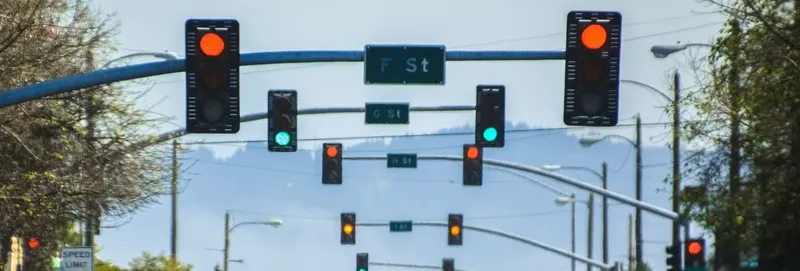
Running Red and Yellow Lights in California
California drivers should take careful heed when approaching an intersection controlled by red and yellow traffic lights. According to the National Highway Traffic Safety Administration, over one-third of all intersection-related fatalities involve traffic lights. If you’re wondering, “What happens if you run a yellow light and it turns red in California?”, read on.
While dangerous, red and yellow light traffic collisions are also some of the most preventable accidents. Accidents are common when drivers think they can “make” the yellow light before the light turns red. Other times, accidents occur because a driver fails to yield to oncoming traffic or applies the brakes too late after becoming aware of the red light.
California drivers shouldn’t gamble with their lives and the lives of other drivers. To minimize the risk of intersection traffic accidents, California drivers should follow the speed limit, remain vigilant of surrounding cars, and use extra caution when driving in adverse weather conditions.
Contact us online or call (707) 426-5300 for more info today. Our California car accident lawyers are ready to help and answer any questions you may have about red and yellow light accidents in California.
Running a Yellow Light or Red Light in California: What the Law Actually Says
Many California drivers assume any yellow light violation is illegal, but the law on yellow lights and red lights works differently than most people think. Here’s what matters if you were hurt by a driver who ran a red or yellow light.
Key Takeaways
- Under California Vehicle Code 21452, entering an intersection on yellow is legal; a violation only occurs if the car is still past the stop line after the light turns red.
- Vehicle Code 21453 governs red light violations, and a driver already in the intersection before the light changed, such as one waiting to turn left, is not considered a red light runner.
- A driver who speeds through a yellow light instead of slowing down can still be found negligent if that choice causes a crash, even without a red light violation.
Is It Illegal to Run a Yellow Light in California?
California Vehicle Code 21452 provides that a “driver facing a steady circular yellow or yellow arrow signal is, by that signal, warned that the related green movement is ending or that a red indication will be shown immediately thereafter.”
California’s yellow light law permits drivers to enter an intersection during a yellow light. No violation exists unless any part of the car is over the stopping line when the light turns red. However, the law encourages drivers to slow down before reaching the intersection.
In California, running a red light occurs if any part of your vehicle is past the stop line when the light turns red. If you enter an intersection on a yellow light but do not clear it before it turns red, you may be cited for a traffic violation.
It doesn’t matter if they saw it or not. Drivers speeding through a yellow light may be found negligent for not slowing down if their driving caused an accident or injured others.
Confused About Fault in a Red or Yellow Light Accident? Let Us Help Clarify Your Rights
Free Case Review
Is It Illegal to Run a Yellow Arrow in California?
Like yellow circular traffic lights, yellow arrows are not illegal to drive through. But they automatically put drivers on notice that the light will soon be changing to red.
In addition, California drivers turning on a left yellow have a legal duty to yield to oncoming traffic. Failure to yield before turning left will likely result in liability regardless of whether the driver saw the yellow arrow light.
What is Considered Running a Red Light in California?
A vehicle entering an intersection after the signal turns red constitutes a violation. Drivers already in the intersection when the light changes, such as those waiting to turn left, are not considered red light runners.
What Happens If You Run a Yellow Light and It Turns Red?
Like everywhere else in the world, red lights in California mean stop. Common causes of accidents involving red lights include:
- Failing to make it through a yellow light before the light turns red;
- Failing to stop completely before taking a right on red; and
- Following too closely behind another driver through an intersection.
If the light turns red while you’re in the intersection waiting to turn left, you should complete your turn when it’s safe, even if the light has changed. Traffic laws generally allow you to finish turning to clear the intersection.
Note that red light accidents do not involve only drivers. Pedestrians are common victims when drivers decide to roll through a crosswalk on a red light.
What Happens If You Run a Yellow Light and It Turns Red?
Turn left against a red light only when moving from one one-way street to another, ensuring no prohibitive sign is present. Yield to vehicles, pedestrians, and bicyclists with a green light.
You’re Not Alone After a Red or Yellow Light Crash
Getting hit at an intersection happens in an instant, but sorting out who ran the light and who’s liable can feel like an uphill battle.
Since 1984, Wells Call Injury Lawyers has stood up for injured Californians and recovered more than half a billion dollars for our clients. Talk directly with a real lawyer, not a call center, about what happened and what you’re owed.
Schedule A Free ConsultationInjured at a Red or Yellow Light? Trust an Experienced Personal Injury Attorney to Fight for You
Since 1984, our firm has represented numerous Californians in a wide array of personal injury lawsuits arising from intersection traffic accidents. To date, we have recovered over $500 million for our clients.
If you or a loved one are injured as the result of another’s careless driving, contact the seasoned attorneys at Wells Call Injury Lawyers for a free consultation. We can help determine your best options going forward.
Frequently Asked Questions: Red Light and Yellow Light Accidents
No, not by itself. California Vehicle Code 21452 allows a driver to enter an intersection on a yellow light; a violation only happens if part of the car is still past the stop line after the light turns red. Speeding up to beat the light, though, can still support a negligence claim if it causes a crash.
Running a red light generally means entering the intersection, crossing the stop line, after the signal has turned red. A driver who was already in the intersection before the light changed, such as one waiting to turn left, is not considered a red light runner under Vehicle Code 21453.
Fault depends on where each driver was when the light changed. A driver who entered on yellow before it turned red generally has the right of way, while a driver who ran the newly red light or failed to yield, such as making a left turn without clearing oncoming traffic, is typically the one at fault.
If part of your vehicle is still behind the stop line when the light turns red, you can be considered to have run the red light, even though you entered on yellow. Whether that makes you liable in a crash depends on the full picture, including your speed and whether you had time to stop safely.
Yes. A driver turning left has a legal duty to yield to oncoming traffic, even when doing so on a yellow light. If a left-turning driver fails to yield and causes a crash, that failure can be strong evidence of fault regardless of the light’s color at the time.
Common causes include drivers failing to clear an intersection before a yellow light turns red, incomplete stops before turning right on red, following too closely and rear-ending a car that stopped for a changing light, and drivers rolling through crosswalks on red and striking pedestrians.
Yes. Entering on yellow is legal under California law, so if another driver ran the red light, ran the yellow illegally, or failed to yield, you can pursue a claim for your injuries. Your own timing at the light does not automatically bar you from recovering compensation.
These claims typically turn on reconstructing exactly where each vehicle was when the signal changed, using traffic camera footage, witness statements, and police reports. An attorney gathers that evidence to establish which driver ran the light or failed to yield, then pursues compensation for medical bills, lost wages, and pain and suffering.
Yes. According to the National Highway Traffic Safety Administration, more than a third of intersection-related fatalities involve traffic signals, making red and yellow light violations one of the more common causes of serious intersection crashes.
You are not required to have one, but these cases often come down to disputed timing, whose light was actually red or yellow, and insurers frequently argue the point to avoid paying. An experienced California attorney can secure traffic camera footage and other evidence before it disappears and build the case for full compensation.
If you’re hurt and unsure what to do next, contact the California personal injury law firm clients trust. We’re here to listen and help you find a path forward. Tell us what happened, and we’ll walk you through your options—no pressure, no upfront costs.